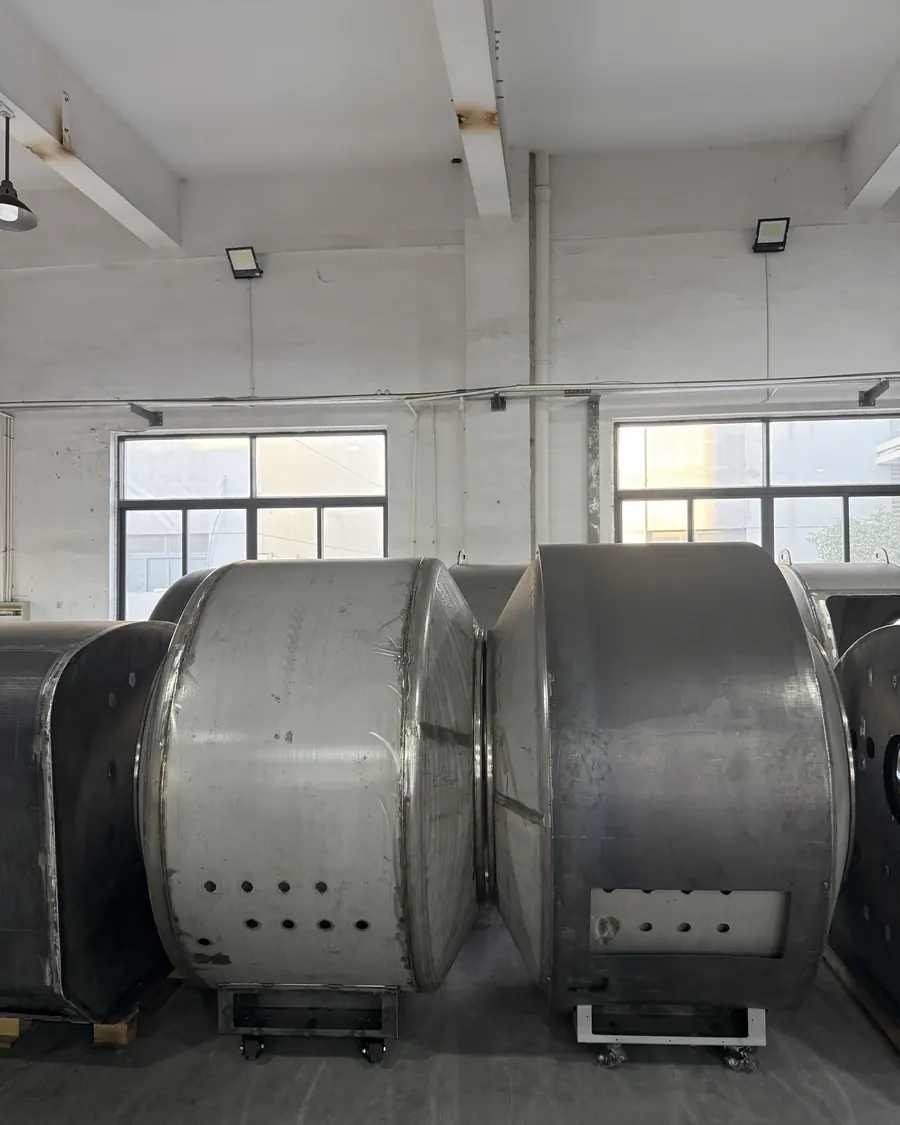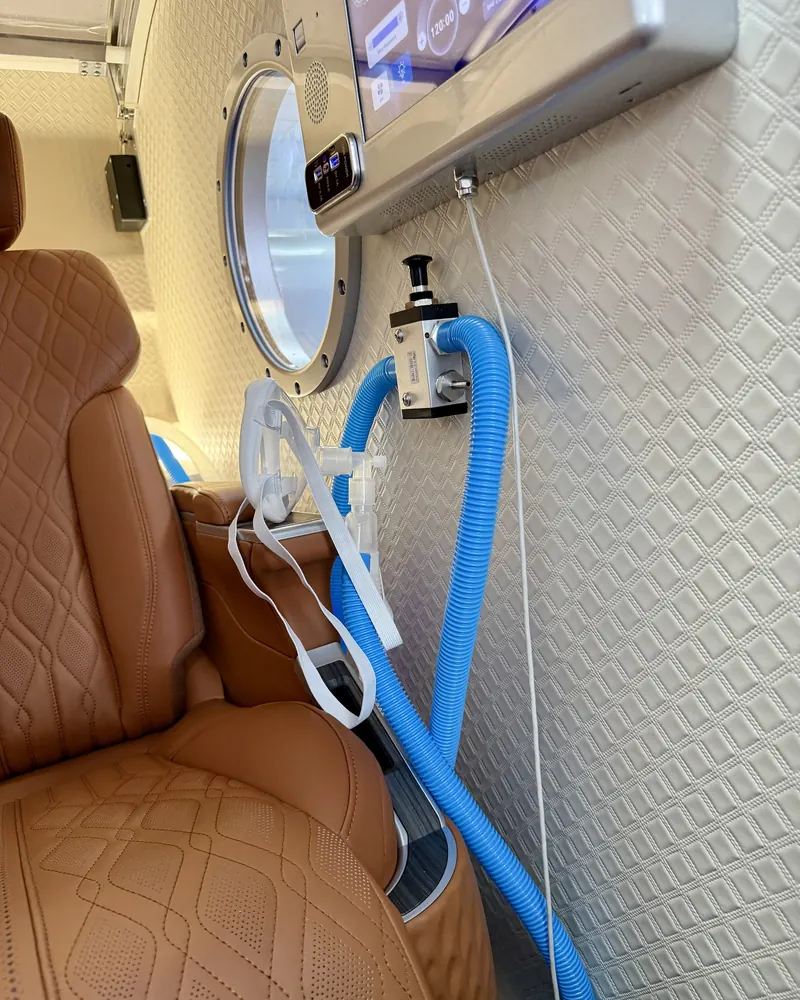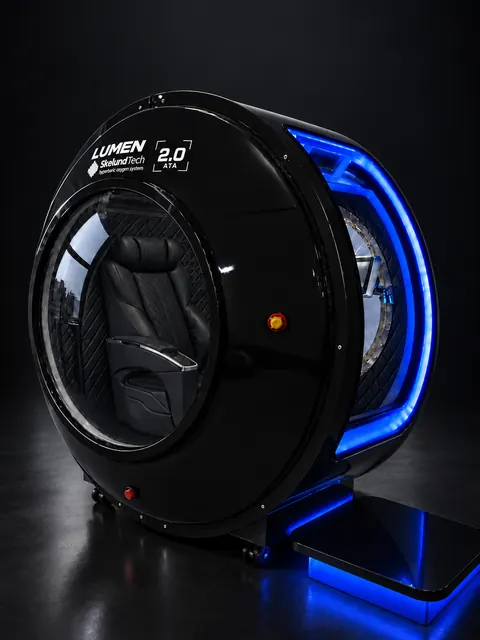
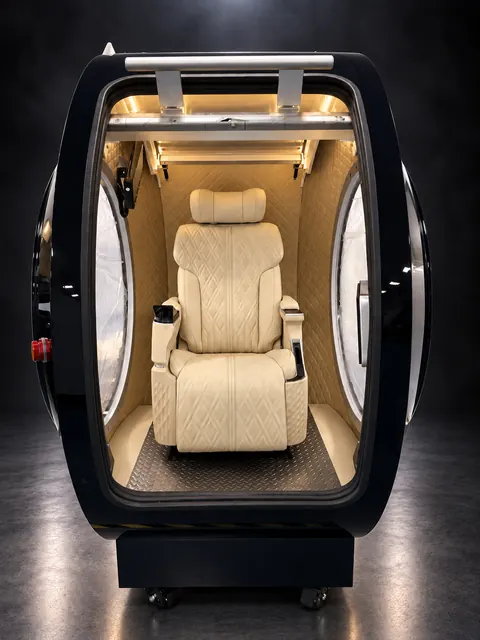
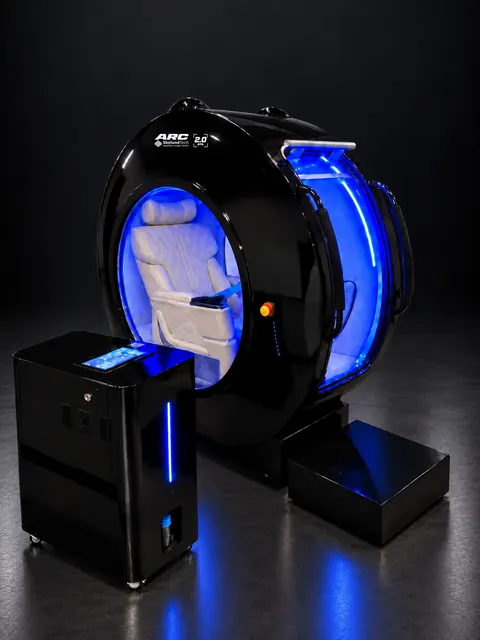
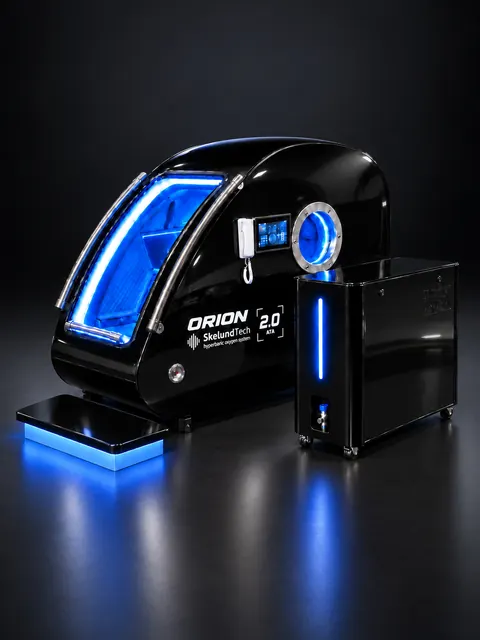
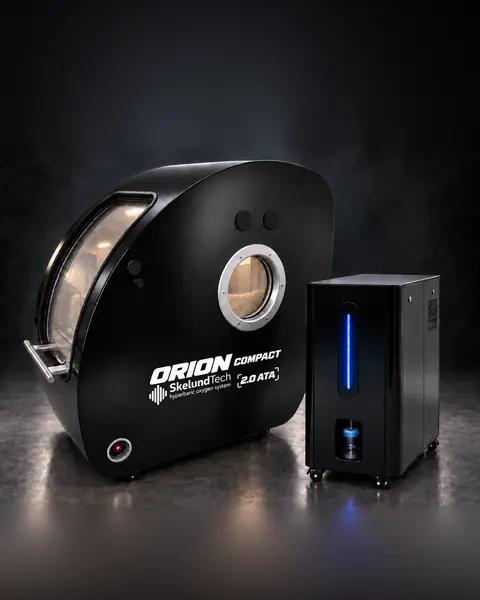
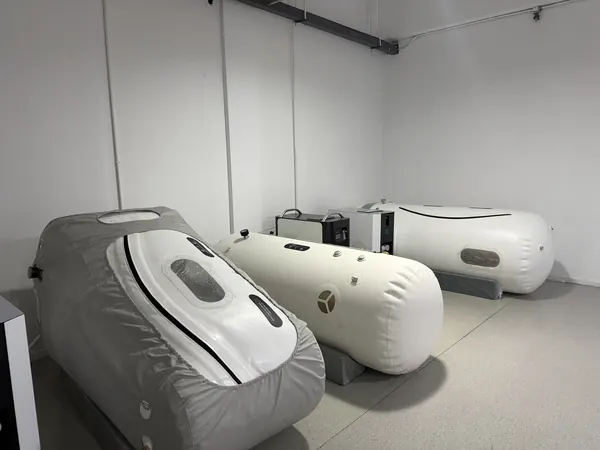
The upgrade is from 1.2–1.5 ATA in a fabric chamber of 30–50 kg to 2.0 ATA in a steel chamber of 500–1,185 kg with its own main unit. Expect a dedicated power circuit (20 A at 110 V or 8 A at 220 V for the standard 10L system), a route check for every door, turn, stair and lift, a crate instead of a box, and a longer lead time: about 30 days to build against about 10 for a soft chamber. If the room is upstairs with no lift, a modular or segmented chamber is the answer, not a lighter hard-shell.
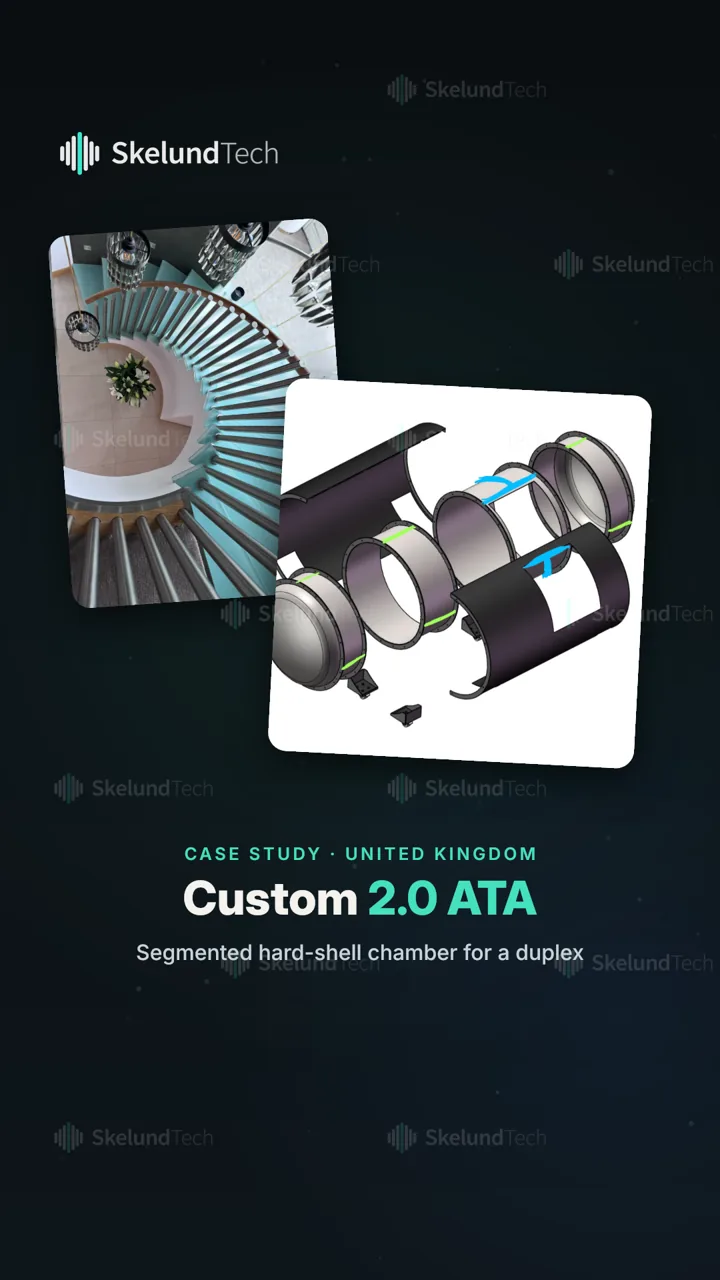
Watch
UK custom chamber proposal
The UK case study on video: the spiral staircase, the sectioned design, the flange and welding evidence, the PC window and door tests, 20L + BIBS and the 2.0 ATA test run.
Why people upgrade
Soft chambers are a good first chamber: REST, DRIFT and COVE operate at 1.2–1.5 ATA, weigh 30–50 kg, run from an 85 kg all-in-one unit rated 1,500 W and ship in about 10 days. The reason owners come back for a hard-shell chamber is almost always the same — the operating pressure. Our hard-shell models run at 2.0 ATA, which a fabric shell is not designed for. Everything else that changes follows from the steel shell that makes 2.0 ATA possible.
Five things that change
- Weight. From 30–50 kg to about 500 kg (ORION COMPACT), 720 kg (ARC), 860 kg (VISTA), 1,000 kg (LUMEN) or 1,185 kg (ORION), plus the main unit. Upper floors need a floor-loading check.
- Width and the route. A soft chamber folds; a hard-shell chamber is a steel body 830–1,400 mm wide that has to pass every door, corridor, turn and lift on the way to the room. The narrowest documented widths are 770 mm for LUMEN's central body with its side modules removed and 830 mm for ORION COMPACT. The site planning guide explains which width to compare.
- Power. The soft chamber's unit is rated 1,500 W on 110 V or 220 V. A hard-shell main unit needs a dedicated circuit: 20 A at 110 V / 60 Hz or 8 A at 220 V / 50 Hz for the standard 10L system, 25 A or 13 A with the optional 20L system and BIBS. Details in the electrical guide.
- Delivery. A crate, not a carton: export crating, sea freight of about 20 days to the US West Coast, 25 to Oceania and 35 to Europe and the US East Coast, then unloading and carry-in that you arrange locally. Lead time is about 30 days to build, against about 10 for a soft chamber.
- Oxygen system and comfort. Instead of a 10 L/min flow from the soft chamber's unit, a 10L all-in-one main unit with concentrator, compressor and air conditioning in one cabinet — or the optional 20L with BIBS, a built-in breathing system with a mask. Inside: fixed windows, a rigid door, a sofa or seat, two touch panels and two intercoms.
A worked example: the UK proposal
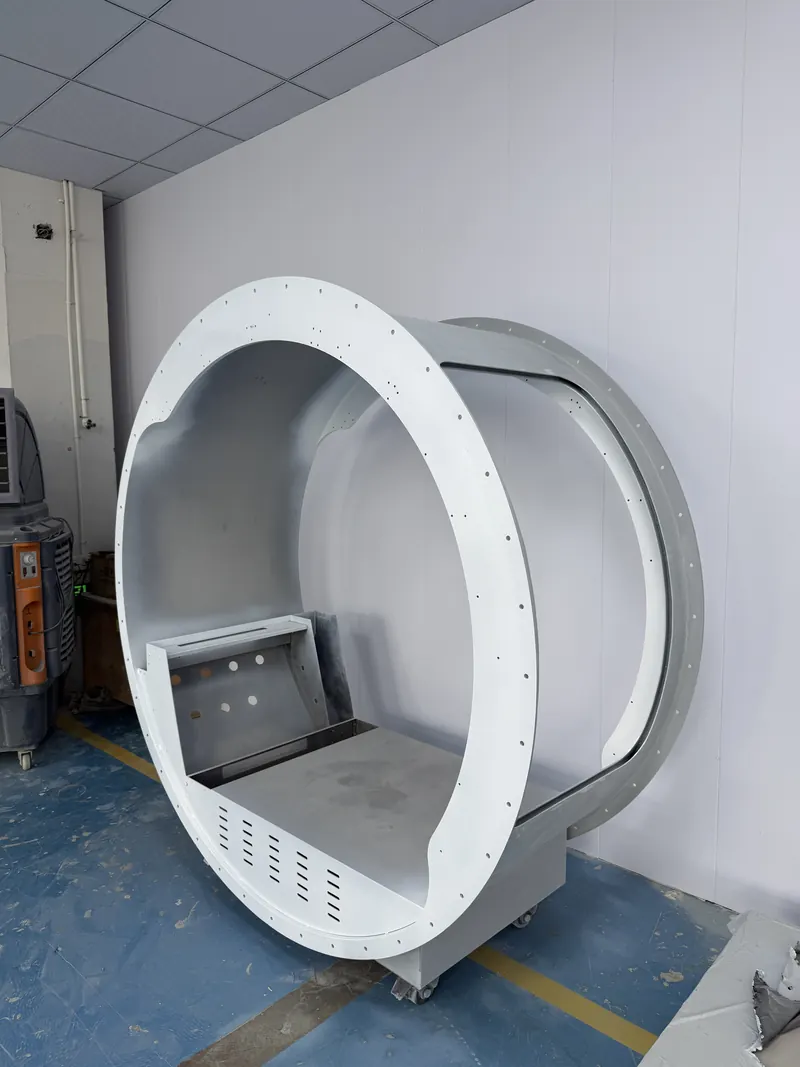
A client in the United Kingdom already owned a 1.5 ATA soft chamber and had wanted a 2.0 ATA hard-shell chamber for some time. The difficulty was the building: a duplex apartment, with the chamber room on the upper floor, reached by an internal staircase — no lift, and no possibility of removing a window to hoist a chamber in. A conventional hard-shell lying chamber was simply too heavy to carry up.
The client sent drawings and examples of similar products. Our engineers proposed a round lying chamber about 1 m in diameter at 2.0 ATA, built in flanged sections of roughly 100 kg each, so that every section could be carried up the stairs by hand and the chamber bolted together on the upper floor. The proposal went to the client as design drawings and renderings, and the client built a paper model at home to check the sizes against the room and the stairs.
Because a segmented pressure chamber stands or falls on its joints, most of the proposal was evidence rather than pictures: the flange details, welding samples with the door section marked for reinforcement, stainless-steel material samples and reference parts, a test of the polycarbonate window and of opening and closing the door, the 20L main unit with BIBS, a video of a chamber under test at 2.0 ATA, and an illuminated entry step added to the specification.
The client has not placed an order; the proposal placed no obligation on them. We describe it because the proposal stage is where the engineering happens — and because the same thinking is behind HORIZON, our completed design for a segmented lying chamber in sections of about 100 kg. Names are withheld.
What stays the same
The factory. Soft and hard-shell chambers are both made in Zhuji, by the same company, and both come with remote support from the team that built them, a two-year company warranty set out in the contract and replacement parts free of charge. The quotation process is the same too: per project and destination, confirmed by our sales team, with no public price list.
How to plan the move
- Measure the route before you choose the model — the narrowest door, every turn, the stairs or lift — and photograph it.
- Tell us the floor level and whether the building has a lift rated for the load.
- Have an electrician confirm a dedicated circuit for the main unit you intend to order.
- The two systems are independent, so the soft chamber can stay in use while the hard-shell chamber is built and shipped.
- Send us the route, the room and your intended use; we check it against the chamber drawings before production and tell you if a modular or segmented chamber is the right answer.
Questions
Can a soft chamber be converted to 2.0 ATA?
No. The fabric shell of a soft chamber is designed for 1.2–1.5 ATA; 2.0 ATA needs a steel pressure vessel, which is what a hard-shell chamber is.
Can I keep using the soft chamber?
Yes. The two systems are independent — the soft chamber runs from its own unit and the hard-shell chamber from its main unit.
Does a hard-shell chamber need a bigger room?
It needs space for the chamber footprint plus the main unit, its connections, the door's movement and service access. Chamber sizes run from 1,450 × 830 × 1,450 mm (ORION COMPACT) to 2,005 × 880 × 1,550 mm (ORION) and 1,850 × 1,400 × 2,000 mm (LUMEN, VISTA).
Sources
- SkelundTech hard-shell and soft chamber model documentation, October 2026
- SkelundTech factory confirmation of lead times and transit times, October 2026
- Custom proposal prepared by SkelundTech engineering for a client in the United Kingdom (proposal stage; client details withheld)